Welcome to the World of Premium-Quality EPAL Euro Pallet Manufacturing

As a certified manufacturer of wooden EPAL Euro pallets, our production process is defined by strict quality control and compliance with the highest industry standards.
We are committed to providing pallets that ensure safe transportation and storage of goods, optimizing logistics processes for greater efficiency and sustainability.
Every pallet produced in our facility undergoes rigorous inspections at every stage of production, overseen by experienced specialists.

Why Are EPAL Pallets Synonymous with Safety and Reliability?

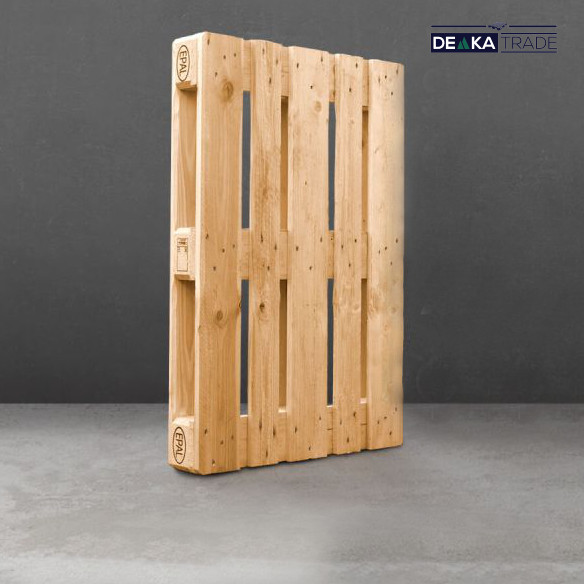
The EPAL Euro pallet is recognized for its durable four-way entry design, allowing forklifts to handle it from all sides with ease.
Each pallet features specific markings, including the EPAL logo and phytosanitary symbols, ensuring full compliance with international ISPM 15 standards.
This guarantees seamless cross-border transportation and protection against harmful organisms.

Our production is not just a symbol of quality—it represents innovation.
We manufacture over 2,000 pallets daily, serving markets in Serbia as well as across Europe, including Hungary, Germany, and Austria.
Thanks to meticulous wood processing, we also produce specialized pallets for heavy-duty transport,
with the option of issuing dynamic and static load capacity certificates in collaboration with accredited institutions.

The Production Process: From Raw Wood to Perfection

The journey begins with the careful selection of raw materials—high-quality poplar wood sourced from sustainably managed forests.
The wood is processed in our state-of-the-art sawmill, where precise wooden components are cut to form the foundation of every pallet.

Our production process includes two assembly methods:

  1. Manual Assembly – A flexible production approach that allows for the manufacturing of smaller batches or custom pallets
    based on client specifications, with a capacity of up to 600 pallets per day.
  2. Automated Assembly – A high-capacity production line capable of assembling over 1,500 pallets per day,
    ensuring exceptional precision and consistency in quality.

Sustainable Manufacturing with a Focus on Environmental Responsibility

All wood processing residues are repurposed into composite pallet blocks, significantly reducing waste and maximizing raw material efficiency.
Our production process is completely water-free, further contributing to the conservation of natural resources and energy efficiency.

Heat Treatment for Global Standards Compliance

To ensure our products meet international requirements, all pallets undergo heat treatment in accordance with the ISPM 15 standard.
During this process, the wood is heated to a minimum of 56°C for at least 30 minutes, effectively eliminating any potential harmful organisms without the use of chemicals.

Technical Capabilities and Key Advantages of Our Pallets

  • Load capacity: from 300 kg to 1,500 kg, with customization options to meet specific customer needs.
  • Precision-dried wooden components – pallets with moisture levels below 22%, ideal for industries requiring dry pallets.
  • Custom-sized pallets tailored for specialized industrial applications.

Trusted by Domestic and International Clients

Our pallets play a vital role in the supply chains of leading companies across the region and beyond.
Their durability, compliance with global standards, and reusability make them an essential asset in the transport and storage industry.

Our commitment to quality and sustainability has made us the leading EPAL Euro pallet manufacturer in Serbia.
Join the many satisfied clients who have already recognized the advantages of partnering with us,
and enhance your logistics operations with reliable, certified, top-quality pallets.

Wooden Pallet Manufacturing Process

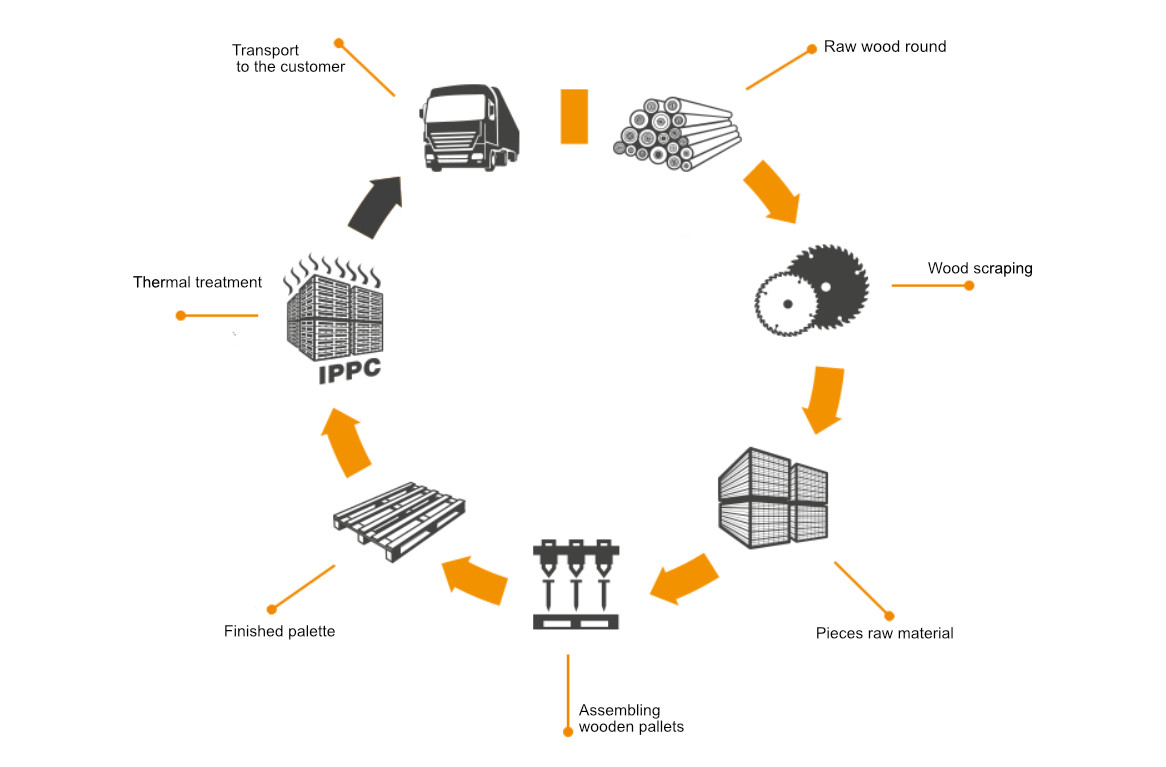
Circular EPAL Pallet Manufacturing Process

1. Raw Logs
The production process begins with the careful selection of logs from sustainably managed forests.
Each log undergoes strict quality control to ensure optimal raw material for pallet component manufacturing.

2. Debarking
Logs are debarked to remove the outer bark, leaving clean wooden elements ready for further processing.
This step enhances precision in the subsequent cutting and production phases.

3. Precision Cutting
After debarking, logs are cut to precise dimensions, producing boards and blocks needed for pallet assembly.
Residual materials such as sawdust and bark are recycled and repurposed into composite pallet blocks, supporting a more sustainable manufacturing process.

4. Pallet Assembly
Components are assembled into final pallets using advanced machinery and manual craftsmanship, depending on customer requirements.
This process includes precise positioning of blocks, boards, and nails to ensure maximum stability and load-bearing capacity.

5. Heat Treatment (IPPC Standard)
Each pallet undergoes heat treatment in compliance with the ISPM 15 standard.
The process involves heating the wooden components to at least 56°C for 30 minutes, eliminating harmful organisms and ensuring safe international transportation.

6. Finished Pallet
After processing and final quality inspections, pallets are stamped with official EPAL markings and are ready for storage and distribution.

7. Delivery to Customers
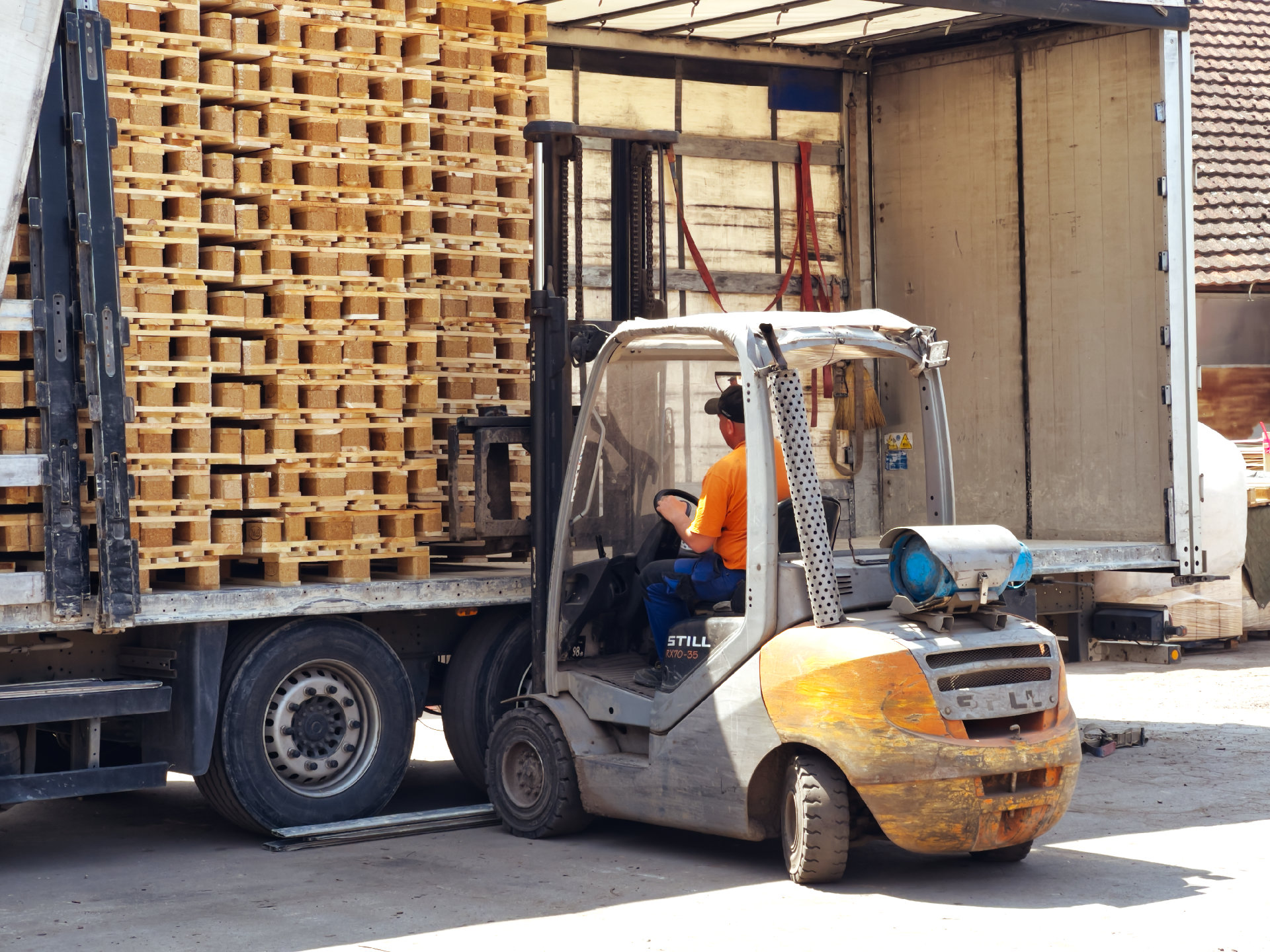
Our ready-to-use pallet solutions are delivered directly to customers’ locations via our dedicated transport fleet.
For faster logistics, there is also an option for direct pickup from our facility.

EPAL EURO PALLETS Composite Pallet Blocks

Our Raw Materials – Quality from Nature

Eco-Friendly Renewable Resources as the Core of Our Products

Our production begins with the selection of high-quality poplar wood sourced from sustainably managed forests.
The raw material is carefully chosen to meet strict quality standards, ensuring durability and long-lasting performance for every product.

  • Material: Poplar wood – lightweight yet strong.
  • Advantages: Heat-treated in compliance with the ISPM 15 standard for international transport.

Debarking

Maximum Raw Material Utilization Through Advanced Processing

The debarking process is a crucial step in EPAL Euro pallet manufacturing.
This stage ensures maximum utilization of each log, resulting in an optimal yield of high-quality lumber
for pallet component production.

Through carefully optimized production operations, every log undergoes a precise processing cycle
to maximize efficiency and minimize waste. Residual materials, such as sawdust, bark, and wood scraps,
are never discarded—they are repurposed and used in the production of composite pallet blocks.
This approach guarantees a sustainable manufacturing cycle and contributes to the conservation of natural resources.

🎥 Watch our video to see the debarking process in action at our facility.

Wood Component Cutting Process in the Sawmill

Precision Cutting for Perfect Pallet Components

Our sawmill utilizes state-of-the-art machinery for precision cutting of logs into components essential for pallet construction.
Each board is cut to exact specifications, ensuring uniform dimensions and maximum stability of the final product.

The primary goal of these operations is to transform cylindrical natural logs into prismatic, sharp-edged wooden components.
The cutting process involves a series of cross-cutting and longitudinal slicing techniques to optimize the wood structure.
At our sawmill facility, we produce all the necessary elements for assembling wooden pallets.

  • Board Specifications:
    • Thickness of top and bottom boards: 22-25 mm.
    • Precisely beveled edges on bottom boards for optimal handling.

Automated Wooden Pallet Assembly Process

Advanced Technology for High-Volume Production

Our automated pallet assembly facility utilizes high-performance machinery
to enable large-scale production of premium-quality pallets.
Each pallet is assembled with exceptional precision and consistent quality.

  • Daily Capacity: Up to 2,000 assembled pallets per day.
  • Annual Capacity: 480,000 pallets.
  • Key Advantages: Increased speed, lower production costs, and uniform quality.

Manual Wooden Pallet Assembly

Expert Craftsmanship for Custom-Built Pallets

Manual wooden pallet assembly allows for the production of smaller batches and pallets tailored to specific customer requirements.
Our skilled craftsmen pay close attention to every detail, ensuring durability and structural stability.

  • Capacity: Up to 600 pallets per day.
  • Key Advantages: Design flexibility and customization for unique customer needs.

NEW – Automatic Line for Cutting Short Logs Up to 400mm in Diameter and Boards

Our cutting-edge production line is engineered to meet the most stringent standards in the timber industry by combining advanced automation with unparalleled precision. Utilizing state-of-the-art technology, our equipment delivers efficient and reliable wood processing, ensuring maximum productivity and superior product quality.

Multi-Head Circular Saws and Cross-Cutters

  • Multi-Head Circular Saw for Log Cutting (150-400mm Diameter):
    Designed for rapid and precise cutting of logs across a range of diameters, this unit optimizes raw material utilization.

  • Multi-Head Circular Saw with Movable Blade/Trimmer:
    A specialized solution for edge processing, this system provides clean and accurate trimming tailored to the specific requirements of each project.

  • Multi-Head Circular Saw for Cutting Up to 160mm Thickness:
    Built to handle thicker boards, this machine guarantees high precision and consistent cut quality even when working with demanding materials.

  • Dedicated Inline Cross-Cutter for Boards:
    Integrated directly into the production line, this cross-cutter ensures fast, reliable, and consistent board processing without operational delays.

Automated Material Handling and Sorting

  • Automated System for Sorting Boards and Prisms:
    This innovative equipment automatically sorts various wood components, ensuring optimal material distribution for subsequent processing stages.

  • Automatic Infeed Conveyors with Centering Mechanism for Untrimmed Boards and Prisms:
    By precisely positioning and guiding raw materials at the start of the production line, these conveyors ensure each element is accurately centered, significantly enhancing overall efficiency.

  • Automatic Sorting Separator for Boards for Cross Cutting:
    An intelligent solution that selects boards based on predefined criteria, this separator ensures timely routing to the cross-cutting station.

Eco-Friendly Solutions and Sustainability

  • Comprehensive Belt System for Sawdust Extraction:
    This system effectively collects and removes sawdust from beneath the entire production line, contributing to a cleaner working environment and facilitating by-product recycling.

Advantages of Our Production Line

  • High Productivity:
    Automation of critical processes reduces processing time and boosts production capacity.

  • Precision and Quality:
    Our state-of-the-art multi-head circular saws and cutters deliver exceptionally precise cuts, resulting in consistently high-quality final products.

  • Flexibility:
    The equipment is designed to accommodate varying dimensions and raw material requirements, enabling the processing of a wide range of wood products.

  • Eco-Friendly Sustainability:
    The integrated sawdust extraction system minimizes waste and improves overall working conditions.

Technical Specifications

  • Minimum Log Diameter: 150mm
  • Maximum Log Diameter: 400mm
  • Maximum Log Length: 2500mm
  • Saw Positioning: Automatic/Computerized
  • Total Installed Power: Approximately 360kW

This comprehensive production line not only delivers technical excellence but also provides significant economic and environmental benefits, making it the ideal solution for modern wood processing operations.

Types of Wooden Pallets

1. EPAL Wooden Pallets

EPAL (European Pallet Association) pallets are synonymous with quality and standardization in the logistics and storage industry.
These pallets undergo strict quality control and are manufactured according to precise technical specifications, ensuring durability, safety, and functionality.

  • Dimensions: 1200 x 800 mm (Standard EPAL EURO Pallet), 1200 x 1000 mm (Industrial EPAL Pallet), 800 x 600 mm (Half-Pallet), 1200 x 1200 mm (Special EPAL Pallet).
  • Material: Sustainably sourced wood (primarily poplar).
  • Treatment: Heat-treated in compliance with the ISPM 15 standard for pest protection.

Key Benefits:

  • Standardized dimensions compatible with all storage and transport systems.
  • Reusable with repairability options.
  • Eco-friendly due to recyclable materials.

2. EURO Wooden Pallets

EURO pallets are similar to EPAL pallets but may differ in technical specifications and markings depending on the manufacturer.
While they are widely used and highly popular, they do not always meet the strict certification requirements enforced by EPAL.

  • Standard Dimensions: 1200 x 800 mm.
  • Load Capacity: Typically between 1,000 and 1,500 kg, depending on material and processing.

Key Benefits:

  • Versatile and widely applicable.
  • More cost-effective compared to EPAL-certified pallets.
  • Ideal for domestic transport and storage.

3. Standard Wooden Pallets

Standard wooden pallets are often custom-made to meet specific customer requirements.
These pallets are used in specialized industries where non-standard dimensions or unique features are necessary.

  • Dimensions: Customizable based on requirements.
  • Material: Poplar, pine, spruce, or other wood types.
  • Load Capacity: Adjustable to specific needs, ranging from 500 kg to 3,000 kg.

Key Benefits:

  • Customizable dimensions and load capacities.
  • Ideal for specialized industrial applications.
  • Easy manufacturing and material availability.

Using Wooden Pallets for a Competitive Advantage. 
Manually storing goods in a warehouse is not a viable option for fast delivery and proper product preservation.
Additionally, goods that are not stored on pallets often take up excessive space in warehouses,
and facilities that do not use palletized systems struggle with organization.
Therefore, pallet usage enhances logistics efficiency.

Here are some key benefits of using pallets:

  • Faster and more efficient loading and unloading processes, ensuring timely shipment and delivery.
    Pallet standardization
    has simplified truck loading since trailers and cargo spaces are also designed according to specific standards.
  • Palletization introduces mechanization into loading and unloading processes, reducing the need for manual labor.
  • Temperature-sensitive products are better protected—perishable goods stored on pallets in warehouses
    without temperature control have a lower risk of spoilage.
  • Reduced risk of damage—pallets act as a protective platform, keeping goods secure and preventing
    shifting or toppling during storage and transport.
  • Improved workplace safety—less manual labor means a reduced risk of worker injuries.
  • Pallet stacking can be pre-planned before shipment or even during transport, as nearly all pallets
    adhere to standardized dimensions defined by clear industry criteria.

Applications and Uses of Wooden Pallets

1. Industrial Manufacturing

Wooden pallets are essential for storing and transporting goods in factories,
especially in the metal, food, and chemical industries. Their load-bearing capacity ensures
safe handling of heavy products such as construction materials, machinery, and industrial components.

2. Retail Chains

EPAL and EURO pallets are indispensable in large retail chains.
They enable efficient transportation and direct in-store product display, saving time and reducing labor costs.

3. Logistics Centers

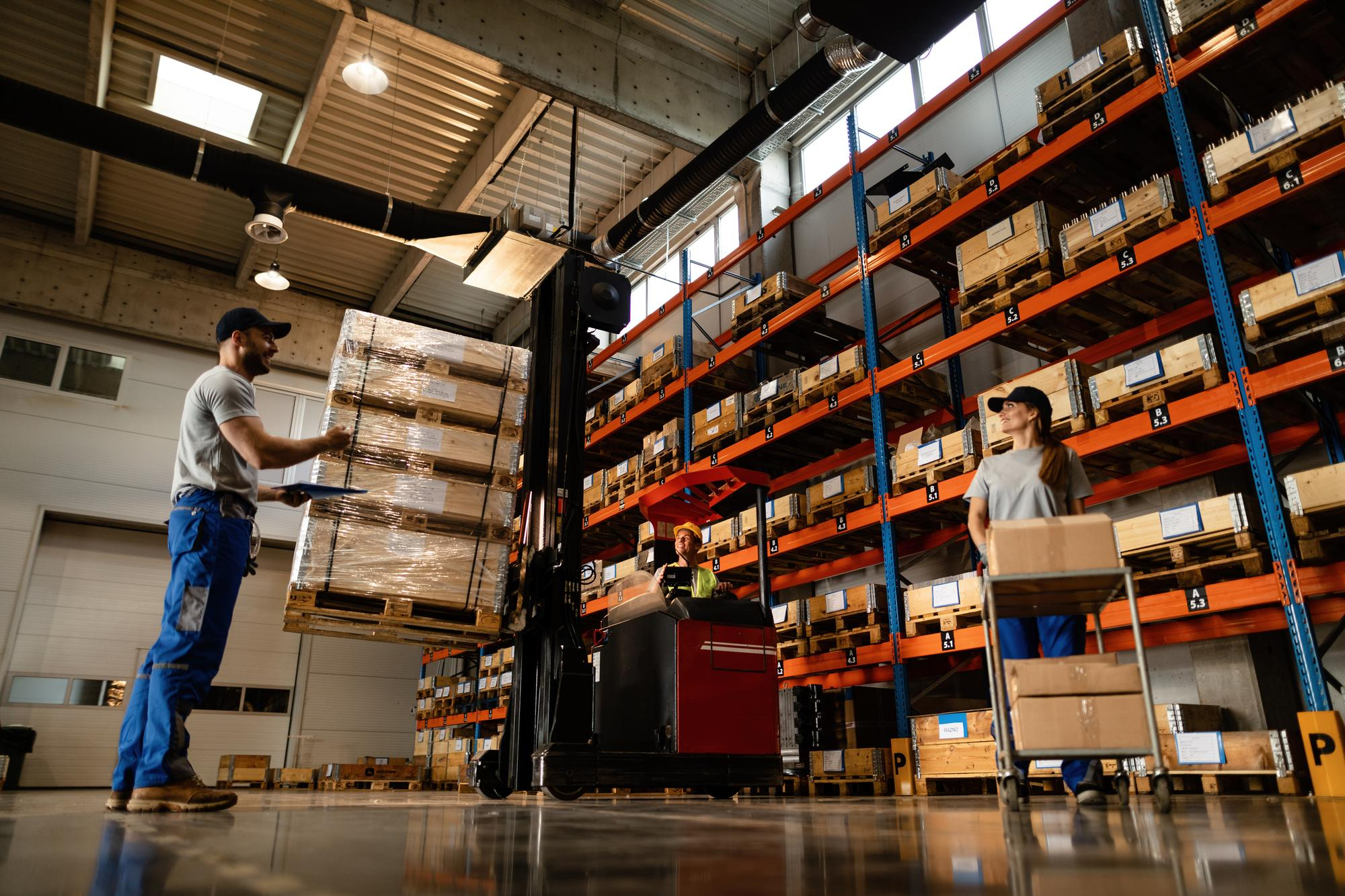
In warehouses and distribution hubs, pallets play a key role in optimizing space utilization.
Standardized EPAL pallet dimensions simplify storage and transportation, minimizing delays.

4. Food and Pharmaceutical Industries

Heat-treated pallets compliant with ISPM 15 standards are crucial for the safe transport
and storage of sensitive products. By eliminating harmful organisms, these pallets ensure
high levels of hygiene and product safety.

5. Export and International Trade

EPAL pallets are globally recognized and accepted, enabling seamless cross-border shipping
without additional phytosanitary inspections. This makes them ideal for export operations and global distribution.

6. Transport of Bulk and Oversized Products

Large industrial pallets, measuring 1200 x 1000 mm and 1200 x 1200 mm,
are used for transporting bulky and heavy goods such as household appliances,
construction materials, and furniture.

Learn More About Our Pallet Types

This page provides a comprehensive overview of the EPAL Euro pallet manufacturing process, from raw material selection to the final product.